What is Protein?
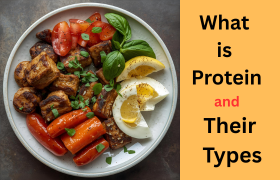
Protein is one of the most essential nutrients required by the human body. It is made up of amino acids, which are known as the building blocks of life. Proteins help in body growth, repair of damaged tissues, building muscles, producing enzymes and hormones, and strengthening the immune system.
Unlike fats and carbohydrates, the body does not store protein, so we must take it daily through food sources like milk, eggs, pulses, paneer, soy, fish, chicken, nuts, etc.
Types of Proteins
Proteins can be classified in different ways. The major types are as follows:
1. Based on Structure
a) Conjugated Proteins
- Made of protein + a non-protein component
Examples:- Hemoglobin (protein + iron)
- Lipoproteins (protein + fat)
- Glycoproteins (protein + carbohydrate)
b) Fibrous Proteins
- Long, thread-like structure
- Insoluble in water
- Provide strength and support
Examples: Keratin, Collagen, Myosin
c) Globular Proteins
- Spherical/round shape
- Soluble in water
- Play important roles in metabolic reactions
Examples: Enzymes, Antibodies, Hemoglobin
2. Based on Nutrition
a) Complete Proteins
- Contain all essential amino acids
Sources: Meat, eggs, milk, fish, soy
b) Incomplete Proteins
- Lack one or more essential amino acids
Sources: Cereals, pulses, nuts
(But combinations like rice + dal form complete protein)
3. Based on Function
a) Structural Proteins
Provide structure and support
Example: Collagen, Keratin
b) Enzymatic Proteins
Help in speeding up chemical reactions
Example: Amylase, Pepsin
c) Contractile Proteins
Help in movement and muscle contraction
Example: Actin, Myosin
d) Hormonal Proteins
Regulate body processes
Example: Insulin, Growth hormone
e) Transport Proteins
Carry substances throughout the body
Example: Hemoglobin, Albumin
f) Defensive Proteins
Protect the body from diseases
Example: Antibodies
g) Contractile Proteins
Help in movement and muscle contraction
Example: Actin, Myosin
Conclusion
Protein is essential for growth, repair, and proper functioning of the body. Based on structure, nutrition, and function, proteins are of various types such as fibrous, globular, conjugated, complete, incomplete, and functional proteins. A balanced diet rich in protein helps keep the body strong, healthy, and energetic.